Skip to content
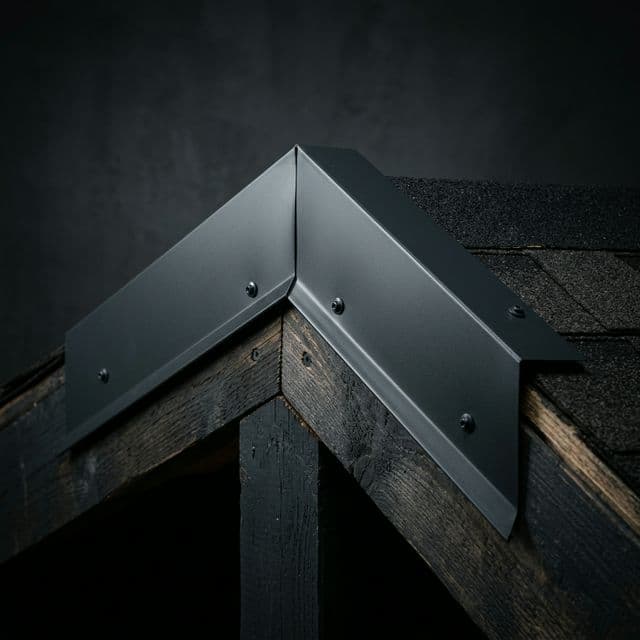
ShopWall abutment flashingsWall Abutment Flashing with Drip Edge
Price by developed widthVD-GLWall Abutment Flashing with Drip Edge
With drip edge

VD-GL

Wall Abutment Flashing with Drip Edge

Wall abutment flashing with a drip edge for better watertightness.

Category

Wall abutment flashings

Unit

per linear metre

Quality guarantee

Material as per the manufacturer's declaration
Certificates available on request
Delivery: 3–7 working days
Direct from the factory in Đakovo

Similar products

All in the category

Category guide

Wall abutment flashings — application, standard and installation

Where it is used

The wall abutment flashing closes the junction of roof and wall: the side junction against a higher wall, the head junction below a wall, the junction with the parapet of a flat roof and the transition over clay tiles (type 1 and type 2). The smaller version serves zones with a small volume of water. The aim is that water from the wall ends up on the roof covering and not in the junction.

The standard and what it guarantees

The sheet is steel S320GD, galvanising Z275 (275 g of zinc per m², both sides) to EN 10346, polyester coating 35 µm. It is folded on a CNC machine to a tolerance of 0.2 mm, so the profile repeats identically on every piece. The sheet standard guarantees the steel substrate and the zinc thickness, not the shape — the shape and the developed width are set by the customer.

What to watch out for during installation

The upper fold of the wall abutment flashing is tucked under the facade or into a chase in the wall and sealed with a permanently elastic sealant (MS polymer), while the lower part overlaps the roof covering in the direction of flow. The pieces are laid from the eaves towards the ridge with overlaps; with trapezoidal sheet the wall abutment flashing for trapezoidal sheet from the flashings category is used. The version with a drip edge is used at junctions where the wind drives the water towards the wall.

Questions and answers

Frequently asked questions: Wall abutment flashings

What is a wall abutment flashing?

The wall abutment flashing is the sheet-metal flashing at the junction of roof and wall — a chimney, a higher adjoining wall, a parapet: the upper part goes under the facade or into a chase, the lower part overlaps the roof covering, so the water from the wall runs onto the roof instead of into the junction. It is folded from galvanised steel S320GD Z275 to EN 10346 with a coating of 35 µm.

How is the junction of the wall abutment flashing with the wall sealed?

The upper fold is tucked under the facade or into a chase cut in the wall and sealed with a permanently elastic sealant for sheet metal (MS polymer), and not with acid-cure silicone, which attacks zinc. The sealant supplements the mechanical overlap, it does not replace it; the sheet is S320GD Z275 to EN 10346.

What is the difference between wall abutment flashing over clay tiles type 1 and type 2?

Type 2 has a wider lower fold that covers the profile of the tiles more deeply, so it is used with high-profile tiles and larger catchment areas; type 1 is the standard version. Both are folded to measure to a tolerance of 0.2 mm.